Finding an ear, nose, and throat specialist in Yokohama when you don’t speak Japanese fluently is one of those experiences that sounds simple until you’re actually in it. You’ve got a persistent sinus infection, your ear won’t stop ringing, or your kid has been pulling at their ear for three days — and suddenly you’re staring at a wall of kanji on a clinic website, unsure if they see foreign patients, whether your insurance works there, or how to even make the appointment in the first place. ENT clinics in Japan (called 耳鼻咽喉科, or jibi inkōka) are common, but finding one where the doctor can actually communicate with you in English is a different challenge entirely. Yokohama has a sizable expat community, but English-speaking specialists are still scattered and not always easy to track down. That’s exactly why this page exists — to cut through the friction and give you a practical, honest starting point so you can get the care you need without spending three hours lost in translation.
What to Expect at a Yokohama ENT Clinic
ENT clinics in Japan tend to be efficient and fairly straightforward once you know what to expect. Most operate on a first-come, first-served basis with same-day walk-in slots, though some larger clinics now offer online reservations through services like LINE or their own booking portals. Wait times can range from 20 minutes to over an hour depending on the time of day — weekday mornings are generally the busiest.
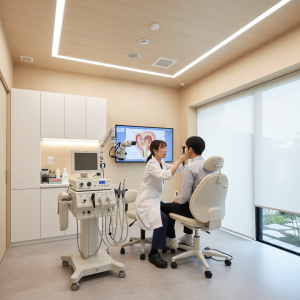
At your first appointment, you’ll fill out a patient registration form (shinsatsuhyō) covering your symptoms, medical history, and insurance details. Bring your health insurance card, your residence card (zairyū kādo), and if possible, a written summary of your symptoms in Japanese. The doctor will typically do a brief examination — scopes, otoscopes, and nasal endoscopes are standard tools you’ll encounter. Treatment is usually quick and practical: prescriptions, nasal rinses, ear irrigation.
If you’re on Japan’s National Health Insurance (NHI), you’ll pay 30% of the total cost out of pocket, which usually means ¥1,000–¥3,000 for a standard ENT visit. Without insurance, costs climb significantly. Prescription medications are dispensed at a separate pharmacy (chōzaiyaku) next door or nearby — don’t skip this step, it’s part of the process.
English-Speaking ENTs in Yokohama
We’re actively building out our directory of English-friendly ENT clinics in Yokohama and don’t have verified providers listed in this category just yet. We know that’s frustrating — it’s exactly the gap this site exists to fill. We’re vetting clinics based on actual English language capability, not just a checkbox on a hospital website, so it takes time to do it right.
Check back regularly — we’re adding new providers across Yokohama’s key neighborhoods including Nishi Ward, Naka Ward, Tsurumi, and Totsuka. If you know of a clinic that should be on our list, let us know through the contact page. In the meantime, the sections below will help you navigate the process on your own, even without a pre-vetted referral.
As a stopgap, the Yokohama City Medical Center (市立横浜医療センター) and Yokohama City University Hospital in Fukuura both have international patient services and can typically connect you with ENT departments that have some English support — they’re worth calling ahead to confirm availability. These are larger hospital settings rather than neighborhood clinics, so expect a longer process, but they’re a reliable fallback.
How to Book an ENT Appointment in Yokohama
Here’s how to actually get yourself in front of a doctor:
- Online booking: Many clinics now list slots through third-party platforms like Enetsu or their own websites. Look for a button that says 予約 (yoyaku — reservation). Some clinics also accept LINE bookings.
- Phone booking: If you’re calling, a simple phrase gets you far: 「英語を話せる先生はいますか?」 (Eigo o hanaseru sensei wa imasu ka?) — “Is there a doctor who speaks English?” Even if the answer is partial, it sets expectations.
- Walk-in: Arrive early — aim for when the clinic opens (usually 9:00 AM). Take a number, fill in the registration form, and wait. Point to your ear, nose, or throat and say 「ここが痛いです」 (Koko ga itai desu) — “It hurts here.”
- What to bring: Insurance card, residence card, a list of any medications you’re currently taking (generic names work best), and your symptom history written out — even in English is fine at many clinics.
If you receive Japanese paperwork after your visit — a diagnosis summary, prescription notes, or a referral letter — Jozu is a handy platform where you can upload those documents and get them translated, which is genuinely useful when you need to share records with a doctor back home or file an insurance claim.
Insurance and Costs
If you’re a resident enrolled in Japan’s National Health Insurance (NHI), ENT visits are covered at the standard 70/30 split — you pay 30%, which typically means ¥1,000–¥3,500 for a consultation plus any procedures. Prescribed medications add a small additional cost at the pharmacy. NHI is available to anyone on a long-term visa (generally 3 months or more), and enrollment is handled at your local ward office.
If you’re visiting Japan or not yet enrolled in NHI, you’ll be paying full price out of pocket — a basic ENT consultation can run ¥5,000–¥10,000 or more without coverage. For travelers and newer arrivals, SafetyWing’s Nomad Insurance is a practical option that covers outpatient care including specialist visits — it’s designed for people living abroad and is significantly more flexible than most travel insurance policies when it comes to ongoing healthcare needs.
If your employer provides private health coverage, check whether your plan includes outpatient specialist care in Japan — many corporate expat packages do, but the reimbursement process usually requires itemized receipts and a diagnosis code, so ask the clinic’s reception for a ryōshūsho (official receipt) before you leave.
Finding the Right Clinic for You
Not every ENT situation is the same, and neither is every clinic. Here’s a quick way to think about it:
- Urgent but not emergency: Walk-in neighborhood clinics are faster. Large hospitals have longer waits but more resources.
- English fluency matters a lot to you: Wait for a verified English-speaking provider from our directory rather than guessing at a random clinic.
- Basic English is fine: Most ENT consultations involve pointing at things and a short exam — you can get through it with minimal language overlap and a translation app.
- Ongoing condition: Find a clinic you can return to. Continuity matters more than convenience for things like chronic sinusitis or hearing issues.
One thing that genuinely helps — even a handful of basic Japanese medical phrases makes a real difference in how smoothly appointments go. If you want to build that foundation before your next clinic visit, iTalki has tutors who specialize in practical, everyday Japanese and can walk you through exactly the kind of language you’ll actually use at a doctor’s office. It’s worth an hour of your time.