You’ve just twisted your ankle stepping off the train at Namba, or maybe that old knee injury is flaring up again and you’ve been putting off dealing with it because — honestly — navigating a Japanese orthopedic clinic as a foreigner sounds exhausting. You’re not wrong to feel that way. Finding an orthopedic specialist in Osaka who speaks enough English to actually explain your diagnosis, let alone discuss treatment options, is genuinely harder than it should be. Most clinic websites are Japanese-only. Phone booking assumes fluent Japanese. Walk-in systems can be confusing if you’ve never used them. And then there’s the insurance question — does your travel policy cover this? Your work health insurance? The national health system? It’s a lot to figure out when you’re already in pain. That’s exactly why this page exists. We’ve put together a practical, honest guide to getting orthopedic care in Osaka as an English speaker — from finding the right clinic to showing up prepared — so you can focus on getting better instead of getting lost in the system.
What to Expect at an Osaka Orthopedic Clinic
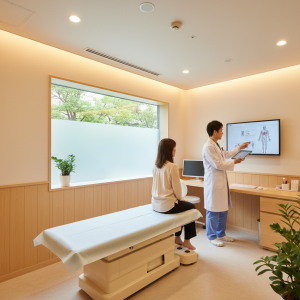
Orthopedic clinics in Japan — called seikei geka (整形外科) — handle everything from sports injuries and fractures to back pain, joint problems, and post-surgical rehab. Most are well-equipped with on-site X-ray, and many have ultrasound and MRI referrals readily available. Here’s what the process typically looks like:
First visit: You’ll fill out a registration form (usually paper, often Japanese-only — more on that below) and describe your symptoms. At clinics with English-speaking staff, this is manageable. At others, you may be relying on a translation app or pointing at a body diagram.
Wait times: Expect anywhere from 20 minutes to over an hour at busier clinics, especially on Monday mornings or after a long weekend. University hospital orthopedic departments tend to have longer waits than private clinics.
Costs: With Japanese National Health Insurance (NHI), a standard first visit typically runs ¥2,000–¥5,000 out of pocket after the 30% co-pay. Imaging adds to that. Without insurance, the same visit could cost ¥8,000–¥20,000 or more depending on what’s done.
Prescriptions and follow-ups: You’ll often leave with a printed prescription and a follow-up appointment. Physical therapy (リハビリ, rihabiri) is frequently offered on-site.
English-Speaking Orthopedics in Osaka
We’re actively building out our directory of English-friendly orthopedic clinics across Osaka — from central areas like Namba and Umeda to neighborhoods like Tennoji, Shinsaibashi, and beyond. We vet each listing for actual English capability, not just a checkbox on a website.
No providers are listed in this category yet, but we’re adding them regularly. If you know a clinic that should be here — or you’re a provider who wants to be listed — get in touch with us. In the meantime, the rest of this guide will help you navigate your options and show up prepared wherever you end up going.
For clinics not yet in our directory, a few general tips for finding orthopedic care in Osaka right now:
- JMIP-accredited hospitals have passed international patient standards and often have medical interpretation services. Osaka City General Hospital and Osaka University Hospital are worth knowing about for more serious cases.
- Your company’s HR or EAP may have a list of English-friendly specialists they’ve used for other expat employees — worth asking.
- Your GP or general clinic (especially if English-friendly) can refer you directly to an orthopedic specialist, which sometimes gets you seen faster.
How to Book an Orthopedic Appointment in Osaka
Online vs. phone: More clinics are moving to online booking systems, but many orthopedic clinics in Osaka still rely on phone calls or walk-in registration. If a clinic has an online form, use it — you can take your time with translation tools. For phone booking, keep it simple:
- “Yoyaku shitai no desu ga…” (予約したいのですが) — “I’d like to make an appointment…”
- “Eigo ga hanasemasu ka?” (英語が話せますか?) — “Do you speak English?”
- “Hiza/kata/koshi ga itai desu.” (膝/肩/腰が痛いです) — “My knee/shoulder/back hurts.”
What to bring:
- Your health insurance card (保険証, hokensho) — essential for NHI coverage
- Your residence card (在留カード) for registration
- Any previous imaging (X-rays, MRI files) — Japanese clinics often give you a CD
- A list of current medications in Japanese if possible
- Cash — many clinics are still cash-only or card-optional
Japanese medical intake forms can be dense, and getting the details wrong matters. If you receive paperwork in Japanese — forms, discharge summaries, prescriptions — Jozu lets you upload the document and get an accurate translation you can actually save and refer back to, which is genuinely useful when you’re managing ongoing care.
Insurance and Costs
Japanese National Health Insurance (NHI): If you’re a registered resident in Japan, you should be enrolled in NHI (国民健康保険, kokumin kenko hoken). This covers 70% of most medical costs, including orthopedic visits, imaging, and physical therapy. Show your insurance card at reception — it’s that green booklet or card your ward office gave you.
Employer health insurance (社会保険, shakai hoken): If your company enrolls you in the social insurance system instead, coverage is similar or slightly better. Same principle — always bring the card.
Visitors and short-term expats: If you’re not enrolled in Japanese health insurance, costs come out of pocket and add up fast. This is where travel or expat health insurance matters. SafetyWing’s Nomad Insurance is a practical option for digital nomads and shorter-stay expats — it covers emergency and acute medical care including orthopedic injuries, and it’s designed to work internationally without a lot of paperwork friction. Worth having before you need it.
Typical out-of-pocket costs (with NHI):
- First consultation: ¥2,000–¥5,000
- X-ray: ¥1,000–¥3,000 additional
- MRI (if referred): ¥3,000–¥8,000 depending on facility
- Physical therapy session: ¥500–¥1,500 per visit
Finding the Right Clinic for You
Not every situation calls for the same approach. Here’s a quick way to think about it:
- Urgent injury (fracture, acute pain): Go to the nearest hospital emergency department. Don’t wait for an English-friendly option — get seen, then sort out communication with a translation app.
- Non-urgent but needs attention (persistent knee pain, shoulder issues): Use our directory (once it’s built out) or ask your GP for a referral. An appointment-based clinic will give you more time and better communication.
- Ongoing rehab or physio: Look for clinics that have in-house rehabilitation — many orthopedic clinics in Osaka do. Proximity to your home or office matters when you’re going two or three times a week.
- Want to communicate better at your appointment: Even a few sessions on iTalki focused on medical Japanese can make a real difference — being able to describe your symptoms clearly, understand basic instructions, and ask the right questions goes a long way in a clinic where English support is limited.
Osaka’s orthopedic care is genuinely good — the clinics are well-equipped, the doctors are thorough, and the system works efficiently once you know how to navigate it. The language barrier is real but manageable with the right preparation. Bookmark this page and check back as we add verified English-friendly providers to the directory.