Eye problems have a way of demanding attention fast — whether it’s a sudden change in your prescription, an infection that won’t quit, or just the annual checkup you’ve been putting off since you moved to Japan. Finding an ophthalmologist in Fukuoka when you don’t speak Japanese fluently is a surprisingly stressful experience. Most clinics operate entirely in Japanese: the reception desk, the intake forms, the instructions the doctor gives you after your exam. Even if your Japanese is decent, medical vocabulary is a different beast. Add to that the confusion around Japanese health insurance, not knowing whether you need a referral, and the general mystery of how appointment booking works here, and it’s easy to just… keep putting it off. That’s exactly why this page exists. We’ve pulled together the English-friendly ophthalmology options in Fukuoka, explained how the system actually works, and laid out what to expect so you can walk into your appointment with a little less anxiety and a lot more confidence.
What to Expect at a Fukuoka Ophthalmologist Clinic
Japanese eye clinics — ganka (眼科) — tend to be efficient and well-equipped, but the experience can feel disorienting if you’re not prepared. Most clinics don’t require a referral for a first visit; you can walk in or book directly. That said, booking ahead is strongly recommended because wait times at popular clinics can stretch to an hour or more, especially on weekday mornings when elderly patients tend to fill the waiting room early.
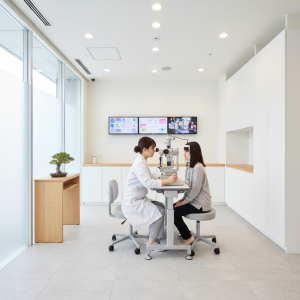
At your first appointment, you’ll be handed a paper intake form in Japanese. It’ll ask about your symptoms, medical history, allergies, and insurance details. Bring your health insurance card (保険証), a photo ID, and if you wear glasses or contacts, bring those too. The doctor will likely run a standard vision test, check eye pressure, and examine the retina depending on your complaint. Many clinics use automated equipment that does a lot of the heavy lifting before you even see the doctor.
Costs vary depending on what’s done, but a standard consultation under National Health Insurance (NHI) typically runs ¥1,500–¥3,000 out of pocket after your 30% co-pay. Prescription eyedrops or further tests will add to that. Payment is usually cash or card at the end of the visit.
English-Speaking Ophthalmologists in Fukuoka
The clinics below are listed on KantanHealth specifically because they can communicate with English-speaking patients — either through fluent English or enough working English to get through an appointment without a translator. We’re actively adding more providers to this list, so check back if you don’t see a clinic near you.
Kimura Ophthalmology Clinic — Akasaka
If you want to explain your symptoms clearly and actually understand what the doctor is telling you, Kimura Ophthalmology is your best bet in Fukuoka. The clinic offers fluent English — which matters when you’re discussing something as nuanced as vision changes, eye strain, or a new prescription. It’s a two-minute walk from Akasaka Station on the Namboku Subway Line (Exit 1), making it genuinely convenient if you’re coming from central Fukuoka. Highly rated and specializing in a range of eye conditions, it’s a solid first stop whether you’re dealing with something acute or just due for a checkup.
Asahara Ophthalmology Clinic — Tenjin
Asahara Ophthalmology sits right in the heart of Tenjin, about a five-minute walk from Tenjin Station’s Central Exit (accessible via both the Kuko and Nanakuma Subway Lines), which makes it one of the most accessible eye clinics in the city. The clinic offers basic English and holds a strong 4.8/5 star rating — a sign that patients, including likely a good number of expats, have had consistently good experiences here. If your concern is relatively straightforward — a prescription update, dry eyes, a minor irritation — the language barrier is unlikely to be a dealbreaker, and the central location is a genuine convenience.
We’re continuing to add English-friendly ophthalmologists across Fukuoka. If you know a clinic that should be listed, let us know via KantanHealth.
How to Book an Ophthalmologist Appointment in Fukuoka
Here’s how the process typically works:
- Check for online booking first. Many Japanese clinics now have an online reservation system linked from their website. Google the clinic name and look for a 予約 (yoyaku) button, or check their KantanHealth profile for booking links.
- Calling the clinic. If online booking isn’t available, you’ll need to phone. A simple opener: 「英語は話せますか?」(Eigo wa hanasemasu ka?) — “Do you speak English?” If they can’t help in English, that’s useful information too.
- What to say when booking: 「予約をしたいんですが」(Yoyaku wo shitain desu ga) — “I’d like to make an appointment.” Have your preferred date and time ready.
- What to bring: Health insurance card (保険証), photo ID, your glasses or contact lens case, and a list of any medications you’re taking.
- Japanese intake forms. You’ll almost certainly be handed paperwork in Japanese on arrival. If you want to review it beforehand or save a translated copy for your records, Jozu lets you upload Japanese medical forms and documents to translate and store them — useful for anything from intake questionnaires to prescription summaries.
Insurance and Costs
If you’re enrolled in Japan’s National Health Insurance (NHI) — which most residents on a long-term visa are required to be — you’ll pay 30% of the cost of most ophthalmology services. That makes a standard eye exam genuinely affordable. Prescription eyedrops, specialist tests like OCT scans, or follow-up visits will cost more but are still subsidized.
If you’re visiting Japan, between jobs, or on a short-term stay without NHI coverage, costs jump significantly. A self-pay consultation can run ¥5,000–¥15,000 or more depending on what’s done. In that case, travel or expat health insurance becomes important. SafetyWing’s Nomad Insurance is a popular option among digital nomads and long-term travelers in Japan — it’s flexible, reasonably priced, and covers emergency and acute medical care including unexpected eye conditions. Check your policy details before your appointment so you know what documentation you’ll need for a claim.
Keep all receipts from your visit. Japanese clinics issue itemized receipts (領収書) that you’ll need for any insurance reimbursement.
Finding the Right Clinic for You
Not sure which clinic to choose? Here’s a quick way to think about it:
- If you need to explain complex symptoms or have a detailed conversation with your doctor, go with Kimura Ophthalmology in Akasaka — fluent English makes a real difference in those situations.
- If you’re in central Fukuoka and your needs are routine, Asahara Ophthalmology near Tenjin is conveniently located and well-reviewed.
- If you’re nervous about the language barrier at any clinic, brushing up on a few basic Japanese medical phrases before your appointment genuinely helps. iTalki is a good place to find a Japanese tutor who can walk you through the vocabulary you’ll actually need.
Eye care in Japan is generally excellent — the equipment is modern, the doctors are thorough, and costs under NHI are reasonable. The main friction is language, and with the right clinic and a little preparation, that friction is very manageable.