Finding an OB-GYN in Hiroshima as an expat is one of those tasks that sounds straightforward until you actually try it. You need a clinic that speaks enough English to discuss something as sensitive and important as reproductive health, prenatal care, or a routine gynecological exam — and suddenly the usual “just Google it” approach falls apart fast. Most clinic websites are entirely in Japanese, phone receptionists rarely speak English, and even if you find a name that sounds promising, there’s no easy way to confirm what level of English support they actually offer before you show up. Add in questions about whether your insurance is accepted, how the Japanese healthcare system handles maternity care differently from what you’re used to, and the general anxiety of navigating a medical appointment in a second language — it gets stressful quickly. This page exists to cut through that friction. We’ve pulled together what we know about English-friendly OB-GYN options in Hiroshima, along with practical guidance on booking, costs, and what to actually expect when you walk through the door.
What to Expect at a Hiroshima OB-GYN Clinic
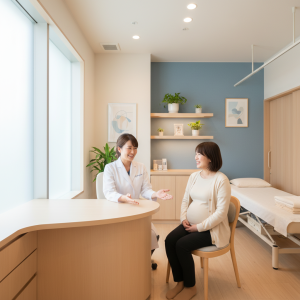
Japanese gynecology clinics tend to be smaller and more specialized than the multi-department hospitals many Western expats are used to. A dedicated fujinka (婦人科, gynecology) or sanka fujinka (産科婦人科, obstetrics and gynecology) clinic will often feel more like a private practice than a large hospital wing. First appointments typically require you to fill out a paper intake form in Japanese — more on how to handle that below — and wait times can range from under 30 minutes to well over an hour depending on the clinic and day of the week. Booking is almost always required in advance; walk-ins are uncommon for OB-GYN visits. If you’re pregnant, you’ll want to register your pregnancy at your local ward office to receive a boshi techo (母子手帳), a maternal and child health handbook that every clinic will ask to see at prenatal visits. Costs for a basic gynecological exam under Japan’s National Health Insurance (NHI) are generally reasonable, but prenatal checkups have a complicated subsidy system that varies by municipality — Hiroshima City provides vouchers that cover a set number of checkups, so ask your ward office about this early.
English-Speaking OB-GYNs in Hiroshima
Finding a clinic where you can communicate comfortably about something as personal as reproductive or maternal health makes a real difference. Below are the English-friendly OB-GYN providers currently listed on KantanHealth for Hiroshima. We’re actively adding more clinics as we verify their English support — check back regularly or browse the full directory for updates.
Setosan Fujinka — Hiroshima
Setosan Fujinka is a gynecology clinic in Hiroshima with basic English support, which means you can expect staff to manage fundamental communication — enough to get through a standard appointment, especially if you come a little prepared. For expats dealing with routine gynecological care or early-stage prenatal questions, this is a practical option worth contacting directly to confirm current English availability before your visit. As with many smaller Japanese clinics, calling ahead and explaining that you’re a non-Japanese speaker gives them the chance to prepare and arrange the best support they can offer you.
We’re continuing to research and add more English-friendly OB-GYN providers in Hiroshima. If you know of a clinic that should be listed, let us know through the KantanHealth directory.
How to Book an OB-GYN Appointment in Hiroshima
Most clinics in Hiroshima require a phone call to book, though some now offer online reservation systems — check the clinic’s website first. If you’re calling in Japanese, a simple opener helps: 「英語を話せる先生はいますか?」 (Eigo wo hanaseru sensei wa imasu ka?) — “Is there a doctor who speaks English?” You can also try 「予約をしたいのですが」 (Yoyaku wo shitai no desu ga) — “I’d like to make an appointment.”
When you arrive, bring your health insurance card (hoken-sho), your residence card (zairyu card), and if you’re pregnant, your boshi techo. You’ll almost certainly be handed a paper intake form in Japanese. If you want to prepare ahead of time, Jozu is a document translation platform where you can upload Japanese medical forms, prescriptions, or clinic paperwork, translate them, and save the results — useful for understanding what you’re signing before your appointment rather than trying to puzzle it out in the waiting room.
Insurance and Costs
If you’re enrolled in Japan’s National Health Insurance (NHI) — which most registered residents are — you’ll typically pay 30% of the cost of a covered medical visit. A standard gynecological consultation might run ¥2,000–¥5,000 out of pocket after NHI. Prenatal checkups are partially subsidized through municipal vouchers, but the number of covered visits and the subsidy amounts vary, so confirm with your local ward office in Hiroshima.
If you’re not enrolled in NHI — visiting expats, digital nomads, or those on certain visa types — you’ll pay full price, which makes private expat insurance worth having. SafetyWing’s Nomad Insurance is a popular option among expats and long-term travelers in Japan; it’s affordable, designed for people living outside their home country, and covers emergency and some non-emergency medical care. It’s not a replacement for NHI if you’re a long-term resident, but it’s a solid safety net while you’re getting settled or traveling through. Always check the policy details for maternity-specific coverage, as this varies by plan and timing of enrollment.
Finding the Right Clinic for You
Not every expat has the same needs, so here’s a quick way to think through your options. If you need fluent English for complex conversations — a difficult diagnosis, detailed birth planning, mental health concerns around pregnancy — push hard to find a clinic that explicitly lists fluent English support, or consider a larger international-facing hospital in the region. If basic English is enough for routine care, a clinic like Setosan Fujinka is worth trying. If you’re centrally located in Hiroshima City, prioritize clinics accessible by major transit lines. If you’re in a more residential neighborhood, a local fujinka clinic nearby may have shorter wait times and a more personal feel — and investing a little time in learning basic Japanese medical vocabulary can genuinely smooth those visits. iTalki is a good place to find Japanese tutors who can help you practice exactly the kind of phrases that come up in medical appointments.
The reality of healthcare as an expat in Japan is that you’ll rarely find a perfect setup — but with a little preparation, the right clinic, and the right tools, you can get the care you need without it being a nightmare. The listings on KantanHealth are a starting point, and we update them as we learn more. Bookmark this page and check back as Hiroshima’s English-friendly options grow.