When I first moved to Japan, I had absolutely no idea when I should go to a clinic versus a hospital. Back home, if something was wrong, I’d probably just head to the hospital emergency room and figure it out from there. But Japan’s healthcare system works completely differently, and understanding this difference can save you both money and time – not to mention a lot of frustration.
The truth is, Japan has this really logical two-tier system where clinics handle most everyday health issues, and hospitals are reserved for serious conditions, emergencies, and complex procedures. It’s designed to be efficient, but if you don’t understand how it works, you can end up in the wrong place at the wrong time, possibly paying a lot more than you need to.
Let me break this down for you in a way that actually makes sense for expats living here.
Table of Contents
- How Japan’s Healthcare System Actually Works
- Understanding Clinics: Your First Stop
- When You Need a Hospital
- The Money Side: Why This Matters for Your Wallet
- Real Scenarios: Where Should You Go?
- Finding English-Friendly Care
- Emergency Situations: When Rules Don’t Apply
- Making the System Work for You
How Japan’s Healthcare System Actually Works
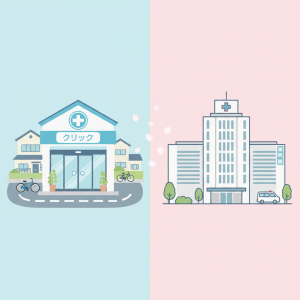
Japan’s healthcare system is built around the idea that most medical issues don’t actually require a hospital. Instead of having massive hospital systems handling everything from colds to cancer, Japan separates primary care (clinics) from specialized and emergency care (hospitals).
Think of it like a filter system. Clinics are designed to catch and handle about 80% of health issues that people deal with – things like colds, routine checkups, managing diabetes, minor injuries, and even some specialized care like dermatology or eye exams. Hospitals, on the other hand, focus on the complex stuff that really needs advanced equipment, multiple specialists, or emergency intervention.
This isn’t just a suggestion – it’s built into how the system works financially and logistically. If you show up at a hospital without a referral from a clinic, you’ll pay significantly more, and you might wait much longer to be seen.
The key thing to understand is that Japanese clinics aren’t like urgent care centers back home. Many of them are serious medical facilities run by experienced doctors who can handle a wide range of conditions. The difference is mainly about resources and specialization, not necessarily quality of care.
Understanding Clinics: Your First Stop
Japanese clinics (クリニック or 診療所) are usually small, focused medical facilities. Most are run by one to three doctors, and they’re designed to be your first point of contact with the healthcare system.
If you’re coming from a healthcare system where you go to the hospital for most things, you might be surprised by how much clinics can actually handle. A good general clinic can manage chronic conditions like diabetes and hypertension, provide routine health screenings, handle minor injuries, and even do basic diagnostic tests.
Then you have specialist clinics that focus on specific areas. Dermatology clinics can handle everything from acne to suspicious moles. Orthopedic clinics can treat sports injuries and joint problems. ENT clinics deal with ear infections, allergies, and sinus issues. These aren’t just “walk-in” places – they’re legitimate medical facilities with specialized equipment and expertise.
The advantage of clinics is that you’re usually seeing the same doctor each time, so they get to know your medical history and can provide more personalized care. At eHealth Clinic Shinjuku, for example, they’re designed to work with international patients and can handle most general medical needs in English.
From a practical standpoint, clinics often work better for expats than hospitals. They’re usually smaller and less overwhelming, the staff has more time to work with language barriers, and many of the English-friendly medical facilities that expats prefer are actually clinics rather than hospitals.
Places like My Medical Clinic Shinjuku or Ra Toole Shinjuku Dental Clinic have built their practices around serving international patients. They understand expat insurance systems, they’re used to explaining procedures in English, and they can take the time to make sure you understand what’s going on with your treatment.
When You Need a Hospital
Hospitals in Japan (病院) are for when you need resources that clinics simply don’t have. This includes advanced diagnostic equipment like MRI or CT scans, surgical procedures, emergency care, or treatment that requires multiple specialists working together.
Japanese hospitals have multiple departments under one roof, 24-hour emergency services, and the ability to admit patients for overnight or extended care. They have the staff and equipment to handle complex medical situations that require immediate attention or sophisticated treatment.
Here’s where it gets tricky: if you show up at a hospital without a referral from a clinic, you’ll pay what’s called a “referral surcharge” (選定療養費, sentei ryouyou-hi). This can add anywhere from ¥5,000 to ¥10,000 or more to your bill, depending on the hospital.
Beyond the money, you’ll also probably wait longer to be seen. Hospitals prioritize patients who have been referred by clinics because the assumption is that those patients have already been screened and actually need hospital-level care.
Real Scenarios: Where Should You Go?
Let me give you some concrete examples of when to choose clinics versus hospitals, because this is where theory meets reality.
Clinic Situations: You wake up with a sore throat and slight fever – this is perfect for a clinic like Shinjuku Southern Clinic. They can diagnose whether it’s viral or bacterial, prescribe appropriate treatment, and give you advice about when to come back if you’re not improving.
You’ve been having recurring headaches for the past few weeks. A general clinic can do initial evaluation, basic tests, and refer you for imaging if needed. They can also rule out simple causes like stress or medication side effects before sending you to a hospital neurologist.
Hospital Situations: You’re having severe chest pain that started suddenly. This is definitely hospital territory – call an ambulance or go directly to an emergency department. Don’t stop at a clinic first.
You need surgery for a condition that’s already been diagnosed. Clinics don’t typically have surgical facilities, so you’ll need a hospital with the appropriate surgical department.
Need help making appointments at Japanese medical facilities? Check out our complete phone script guide for step-by-step instructions on scheduling appointments in Japanese.
Finding English-Friendly Care
For expats, the practical challenge is finding the right kind of clinic — one that can handle your medical issue AND communicate in English. The good news is that Japan’s major cities now have a solid network of international-friendly clinics that have built their practice around serving this exact need.
One thing that catches people off guard: intake forms and consent documents at Japanese clinics are almost always Japanese-only, even at internationally-friendly facilities. If the kanji is slowing you down, Jozu is a translation app purpose-built for Japanese — it handles medical vocabulary and government kanji that trips up general translation apps. Point your camera at the form and you’re sorted.
The Kantan Health directory is organized to help you find English-capable providers near you, with real reviews from other expats. For Shinjuku specifically, eHealth Clinic and My Medical Clinic Shinjuku are two frequently recommended starting points for general care.
Emergency Situations: When Rules Don’t Apply
In a genuine emergency, forget everything about the clinic-first system. Call an ambulance (119 in Japan) or go directly to a hospital emergency department. You will not be turned away, and the referral surcharge is waived for emergency admissions.
Save this number: 119 (ambulance and fire), 110 (police). In Tokyo, the Tokyo English Lifeline (TELL) also runs a crisis helpline in English at 03-5774-0992.
Making the System Work for You
The Japan healthcare system rewards patients who understand how it’s structured. Start at a clinic for most things, get a referral if you need specialist or hospital care, and know when to bypass the system entirely for emergencies. Once you’re oriented, it’s actually more efficient than what many expats are used to — shorter wait times, lower costs, and usually very attentive care at the clinic level.
💡 Expat tip: If you’re between jobs or not yet enrolled in NHI, SafetyWing Nomad Insurance can cover emergency clinic and hospital visits in Japan. For paying medical bills from an overseas account, Wise saves significantly on exchange rates versus regular international cards.